Written by Ashley C. Hernandez, Assistant Professor, Department of City and Regional Planning, UNC Chapel Hill and Kelsey Graff, Graduate Student, Department of City and Regional Planning, UNC Chapel Hill in collaboration with the Walltown Community
Durham’s Walltown neighborhood has long been a testament to Black resilience and self-determination. Like many historically Black communities across North Carolina’s rapidly changing Research Triangle, Walltown is now on the front lines of a familiar struggle: resisting displacement driven by gentrification, speculative development, and rising housing costs.
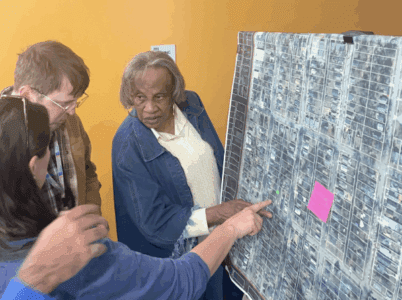
In the shadow of Duke University, residents are organizing to ensure that the future of their neighborhood is shaped not by investors, but by the people who live there. At the center of this fight is a 58-acre site that once housed Northgate Mall, a neglected commercial property whose redevelopment could either destabilize or strengthen the surrounding community. The Walltown Community Association (WCA) is determined to make it the latter.
In summer 2024, after more than six years of community organizing, the WCA secured a major milestone: the launch of a Small Area Planning process in partnership with the Durham City and County Planning Department. The result is the Walltown Small Area Plan, a community-driven framework that outlines policy guidance for the future of the Northgate site. It includes recommendations on land use, stormwater, transportation, and city-owned land, grounded in community priorities. For Walltown, this plan is more than a document—it’s a declaration that development must happen with communities, not to them.
A History of Redlining and Revitalization: Two Sides of the Same Coin
Walltown’s story begins in 1906, when George Wall, a formerly enslaved man and janitor at Trinity College (now Duke University), purchased land and built a home. Over the next century, the neighborhood became a working-class stronghold, home to factory workers, teachers, university staff, and small business owners. Churches, gardens, and corner stores wove a tight-knit social fabric grounded in pride and self-reliance. In 1949, J.L. Alexander transformed a house on what was then 5th Street into one of Durham’s first neighborhood recreation centers, an early sign of Walltown’s long and powerful tradition of community-led development.
But alongside this resilience was a shadow: redlining, racial segregation, and municipal neglect. Jim Crow laws confined Black residents to underfunded neighborhoods and suppressed wealth-building through discriminatory lending. Even today, the built environment bears the scars: streets historically inhabited by Black residents have older, rounded curbs—evidence that they were not paved when the rest of the city was. In contrast, straight-edged curbs mark streets that received investment earlier and were occupied by white residents.
This spatial legacy of racism has made Walltown especially vulnerable to displacement in today’s speculative housing market.
Revitalization Without Protection: A Cautionary Tale
From the 1990s through the 2000s, Self-Help Credit Union, partnering with Habitat for Humanity and the City of Durham, launched an initiative to expand homeownership in Walltown. Nearly 80 families, including 53 Black households, became homeowners. While these efforts improved the quality of life, they also signaled to the real estate market that Walltown was “open for business.” What was missing were protections: rent stabilization, property tax relief, and long-term affordability mechanisms. Without them, capital flowed in and long-time renters and homeowners, many of them retirees on fixed incomes, were left exposed to the rising tide. In the decades since, Walltown has transformed. Property values soared. Housing speculation increased. And the Black population, once 58% of the neighborhood in 1990, has fallen to just under 25% today.
This is not an isolated story. From Chapel Hill’s Northside and Tin Top neighborhoods to Southeast Raleigh, Black and working-class communities across the Triangle are grappling with the same forces: a real estate market disconnected from affordability, and a planning system too often steered by private interests. Walltown’s experience is a warning, and its community activism is a model.
When Redevelopment Comes Knocking: Organize, Resist, and Cast Vision
The fight to shape Northgate Mall’s future began in late 2018, when news broke that the property had been sold for $34.5 million to Northwood Investors, a Denver-based private equity real estate firm. Walltown residents, facing the enormous challenge of confronting global capital, drew strength from local history.
In the 1980s, when the Rand family, then-owners of Northgate Mall, sought to expand into residential Walltown, neighbors successfully organized to stop the encroachment. That earlier victory became a guiding light. Residents had organized for neighborhood control of development before and would gear up to advocate for it again.
In January 2019, more than 50 residents gathered at St. John’s Missionary Baptist Church to express concerns and begin crafting their own vision. The Walltown Community Association launched a canvassing campaign, collecting hundreds of surveys from longtime homeowners, elders, and renters. By February 2020, they released the 10-Point Strategic Vision for Neighborhood Growth, a community-authored plan calling for deeply affordable housing, locally owned businesses, public green space, and a Walltown history hub. Just as the momentum was building, the COVID-19 pandemic stalled in-person organizing. But by 2021, the work resumed. With design support from NC State University faculty and organizing assistance from the Coalition for Affordable Housing and Transit, residents developed a report, “Building a Place for All People,” that included visual renderings of community-driven development plans for what a just Northgate redevelopment could look like. Nearly 600 people engaged in this effort, making it a remarkable organizing feat for a small neighborhood.

Developers Shift, the Community Holds Its Ground
Rather than respond to this community-led vision, Northwood Investors advanced a series of top-down proposals. Their first plan resembled Raleigh’s upscale North Hills, complete with luxury housing, high-end retail, and office space. Residents pushed back, affirming that a mall “for all people” meant ensuring housing for all people, including those at risk of displacement. In 2022, Northwood pivoted sharply again this time proposing a Research Triangle Park-style innovation campus with no housing at all. For a neighborhood where rising rents and displacement are lived realities, the removal of housing from the redevelopment plan felt like an act of erasure.
But Walltown stood firm. Residents made clear: any redevelopment of this magnitude must address community needs and proceed in partnership, not in spite of them. Their persistence paid off. In early 2024, with support from newly elected City Councilmember Nate Baker, Durham officially committed to supporting a community-led Small Area Plan for Walltown. Crucially, the process would center the Northgate site and incorporate community input into the city’s official land use framework. It also halted a premature rezoning effort by Northwood, preserving the community’s leverage. In June 2024, over 70 residents gathered to launch the planning process. Years of grassroots organizing had crystallized into a formal planning mechanism, one that put Walltown residents at the center of shaping one of Durham’s most contested redevelopment sites.
What Is a Small Area Plan—and Why Does It Matter?
By law, every city in North Carolina must maintain a Comprehensive Plan, a broad policy guide for land use and development. But these plans are often high-level, driven by city staff, and lack the specificity needed to address the concerns of historically marginalized communities.
That’s where Small Area Plans come in. Focused on a single neighborhood or issue, they allow for deeper, more community-centered engagement. While technically advisory and non-regulatory, these plans often shape how future development proposals are evaluated, especially when it comes to rezoning decisions.
Walltown’s Small Area Plan, developed in collaboration with the Durham Planning Department, includes:
- Policy recommendations for the Northgate site
- Strategies for addressing flooding, paper streets, and aging infrastructure
- Historic preservation and cultural resource recommendations
- Community-backed guidelines for future land use and affordability
More than anything, the plan transforms years of community advocacy into an actionable document that city departments must consider when making planning and development decisions.
A Regional Model for Community-Led Planning
On Monday, August 18, 2025, the Durham City Council voted unanimously to adopt the Walltown Small Area Plan, a landmark victory not just for Walltown, but for equitable planning across the Triangle. This win shows that when residents organize, cast vision, and hold firm, they can move systems. The plan itself is significant, but so is what it represents: a community refusing to be erased, demanding a seat at the table, and insisting that planning be done differently. Walltown’s strategy, which combines deep resident engagement, consistent pressure on elected officials and developers, cross-sector collaboration, and a refusal to cede moral ground, offers a roadmap for other neighborhoods facing similar pressures. The message is clear: development must serve people, not markets.
Who Is the Triangle Being Built For?
Walltown’s experience forces a critical question—one that applies well beyond Durham: Who are our cities being built for?
Will they serve the interests of investors and affluent newcomers? Or will they honor the histories, needs, and visions of long-term residents, particularly Black, brown, and working-class communities who have carried these neighborhoods through generations of disinvestment. Walltown shows what’s possible when communities don’t just resist displacement, but proactively shape the future at the very same time. Their story reminds us that equity in planning isn’t about checking boxes, it’s about building power, community history, and who gets to call a place home.
Timeline of Community Advocacy in Walltown
December 2018 – Ringing the Alarm
Word began to circulate that Northgate Mall, once a bustling commercial center adjacent to Walltown, had been sold to private developers. Alarmed by the potential for high-end redevelopment and gentrification, Walltown residents immediately approached the Durham City Council to raise concerns. They emphasized that this was not just a mall — it was land deeply connected to the social and economic fabric of their neighborhood.
January 2019 – A Community of Voices Emerges
Over 50 residents gathered at St. John’s Missionary Baptist Church, a historic institution in Walltown, to voice concerns about the mall redevelopment and brainstorm alternative visions. The Walltown Community Association (WCA) initiated a large-scale canvassing effort and ultimately collected over 200 surveys from neighbors, many of whom were elders, renters, and longtime homeowners. The responses voiced deep anxieties about displacement and hopes for affordable housing, community-serving retail, and youth resources.
February 2020 – Launching a Strategic Vision
Building on months of outreach, WCA released a comprehensive visioning document rooted in over 250 community surveys and facilitated focus groups. Residents called for affordable housing, protections for renters and small businesses, public green space, a community advocacy resource center, and a Walltown history hub. This vision was submitted to the city and shared widely with the developer, Northwood Investors.
2021-2023 – Ongoing Advocacy, Delays, and Growing Tensions
In April 2021, Walltown held a press conference advocating for its vision and sharing alternative designs of the Northgate redevelopment. Additionally, that September, the WCA successfully lobbied the Durham City Council for the neighborhood’s inclusion in the city’s Longtime Homeowner Grant Program, which had been running since 2018. Later that year, Northwood Investors would nix its original plans for a large mixed-use development that would have allowed the community to negotiate via a rezoning application. In 2022, Northwood pivoted sharply, proposing a research and innovation campus modeled on Research Triangle Park, eliminating all housing from the plan. The developer still needed to submit a rezoning application, which allowed the WCA and allies to push back, putting forth new alternative designs and demanding real input. While the campaign gained momentum by mid-2023, the project remained stalled — not because of a lack of interest, but because community members insisted on equity.
2024-2025 – A Community Win: Launch and Approval of a Small Area Plan
In June 2024, Durham’s Planning Department launched a community-based Small Area Plan for Walltown with a section focused on the Northgate Mall site. This was a historic step. The plan turns the priorities that Walltown developed with input from hundreds of Durham residents into policy recommendations that will influence future land use decisions about the former mall site. It also includes descriptions and recommended actions for land use issues specific to Walltown, such as flooding, paper streets and alleys, transportation, and historic resources, all informed by community input. On Monday, August 18, 2025, Walltown achieved a major victory when the plan was approved unanimously by the Durham City Council. For Walltown residents, this wasn’t just a planning win — it was recognition of their right to define the future of their city and neighborhood.