In Southeast Raleigh, change has never arrived quietly or evenly. It has come through new property assessments, rising tax bills, and the gradual thinning of everyday relationships that once made the community feel unmistakably like home. Some might describe these shifts as gentrification as they include reinvestment and growth that brings new people and resources but also intensifies displacement pressures for longtime residents. However, alongside these pressures, another force has been growing. This one is one rooted in the community itself, grounded in memory, trust, and collective responsibility.
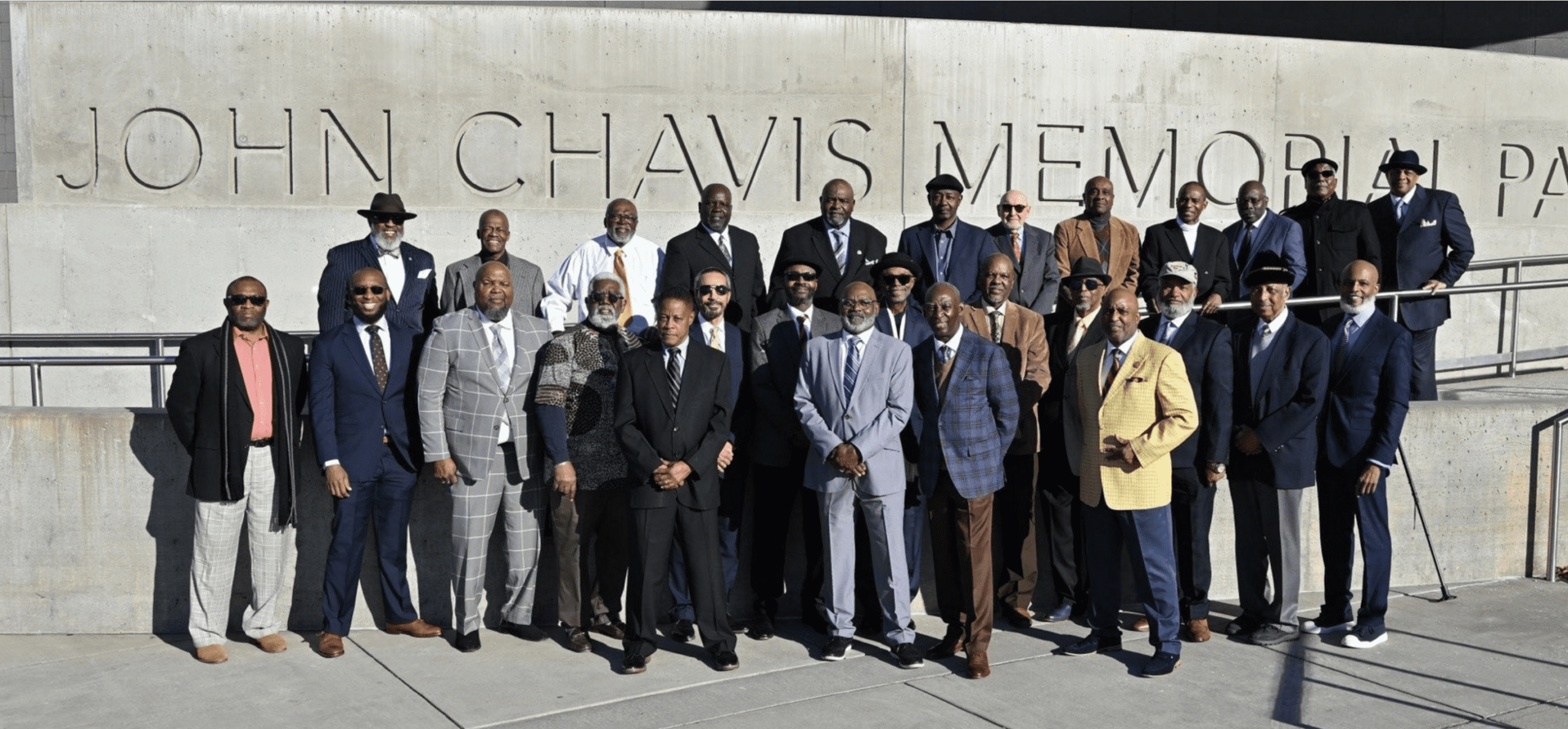
The Men of Southeast Raleigh began meeting in June 2021, when a small group of longtime residents, many of whom grew up together in segregated schools and historically Black neighborhoods, came together with a simple goal. They collectively hoped to help their community in whatever way was needed. What started with about 20 men has grown into a network of more than 80 members, bound not by formal nonprofit structures but by shared history, accountability, and care. “We’re not a nonprofit, we’re not a for-profit,” one member explained. “We’re just a grassroots organization of like-minded men who grew up in Southeast Raleigh and wanted to preserve our history and our legacy.”
Rooted in Place, Responsive to Change
Southeast Raleigh has long been one of the city’s historic Black communities, shaped by segregation, environmental injustice, and uneven public investment. Many of the men remember a time when the city felt divided into two distinct worlds within the same place – Raleigh and Southeast Raleigh. They came of age in a community where nearly everyone knew each other, where schools, churches, and parks served as anchors of collective life.
Around 2021, however, the pace of change had become impossible to ignore. Housing prices surged, and property tax assessments spiked. Longtime homeowners, many of whom are elderly, and holding family homes through heirs’ property, began facing rising bills that made staying put feel increasingly untenable. The threat of displacement wasn’t abstract. It was happening door by door, neighbor by neighbor.
Rather than launching their own programs, the Men of Southeast Raleigh made an intentional decision early on to connect, coordinate, and build partnerships with efforts already underway. They joined forces with schools, churches, and neighborhood groups, offering support where it was needed, working across all areas from child safety initiatives and school reading programs to community cookouts and park stewardship. “Why reinvent the wheel?” one member asked. “If someone’s already doing the work, we show up and help.”
The Men of Southeast Raleigh did not want to reject change. What they reject is exclusion from it. This is their home, one they have lived in, built, and sustained for generations. They believe change should happen with the community, not at its expense.
This philosophy and accompanying strategy helped them build trust quickly and establish their role as a steadfast dependable group. It also laid out the groundwork for what would become one of their most impactful efforts – fighting gentrification and displacement driven by property tax inequities.
Challenging Displacement One Property Tax Appeal at a Time
As conversations within the group deepened, property taxes emerged as a central threat to housing stability in Southeast Raleigh. Members understood inequality as a long-standing reality of life in a racially segregated city. But many described property taxes as the moment when racial and economic disparities became unmistakably clear and deeply personal. Homes were undervalued when families tried to sell, limited wealth-building opportunities. Yet the same homes were frequently overvalued when tax bills arrived, driving up costs for residents who had lived there for decades. Elderly homeowners struggled with online appeals systems that assumed computer access and technical fluency. Families holding land through heirs’ property faced rigid rules that made tax relief nearly impossible, even when homes had been passed down across generations. For many residents, these pressures created an impossible bind. They were required to pay more each year, navigate a confusing system alone, or consider selling the very homes their families had worked hard to keep.
In response, the Men of Southeast Raleigh mobilized. Working alongside housing and legal advocates, they began organizing tax appeal workshops, helping residents understand their rights and navigate the appeals process. In their first year alone, nearly every appeal they supported was successful. Over time, their sustained collective pressure pushed Wake County’s tax office to conduct systemwide reassessments in five Southeast Raleigh neighborhoods, affecting more than 500 homes and resulting in hundreds of thousands of dollars in collective savings.
One member shared his own story. After inheriting his mother’s home and making basic habitability upgrades, his annual property tax bill jumped from $460 to $4,600. Shocked by the increase, he was mobilized to act and successfully appealed, securing long-term relief and cutting his tax burden nearly in half. “These are systemic problems,” another member emphasized. “And if you don’t help people navigate the system, they’ll just give up and pay or leave.”
This work is ongoing. But just as important as the dollars saved has been the shift in mindset. Through workshops, one-on-one support, and community gatherings, the Men of Southeast Raleigh have helped residents learn the impact of community action and that displacement is not inevitable.
Building Power Through Relationships
Today, the Men of Southeast Raleigh partner with more than 80 organizations across the community, including schools, housing providers, youth programs, and faith-based institutions. They’ve adopted the historical John Chavis Memorial Park, supported low-income residents at a new affordable housing development, organized cultural events, and helped launch a sister organization, the Women of Southeast Raleigh. Along the way, they’ve learned how to “party with a purpose.” Community cookouts, fun days, and a sold-out Southeast Raleigh Legacy Gala have become tools for building trust, celebrating history, and sustaining momentum.
Importantly, the group has remained intentionally grassroots. They don’t endorse political candidates. They don’t solicit donations. They choose flexibility over formalization, believing that staying unincorporated allows them to respond quickly and serve whoever needs help, without restriction. “We’re not playing politics,” one member said. “We’re playing action.”
That approach hasn’t gone unnoticed. The group has received multiple community and statewide awards for volunteer service and grassroots leadership, including recognition from housing and child advocacy organizations. But the men are quick to say the real measure of success is much simpler and quieter: Neighbors staying in their homes, elders feeling supported, and a community that knows someone has their back.
Lessons for the Triangle
For other historically Black neighborhoods across the Triangle facing similar pressures, the Men of Southeast Raleigh offer several lessons.
- Start with relationships. Deep trust makes it possible to mobilize quickly.
- Don’t wait for perfect alignment. Action builds momentum.
- Share knowledge. Education is a form of protection.
- Celebrate together. Joy sustains long fights.
Above all, their work reminds us that pushing back against displacement to preserve the community isn’t only about policy. It is also about dignity, memory, and collective care.
As Southeast Raleigh continues to change, the Men of Southeast Raleigh are clear about their role. They are here to preserve legacy, protect neighbors, and pass forward the knowledge that communities need to stay rooted. “We do care,” one member said simply. And in Southeast Raleigh, that care has become a powerful force for good.