Written by Ashley C. Hernandez, Assistant Professor, Department of City and Regional Planning, UNC Chapel Hill in collaboration with the Grant Street Community
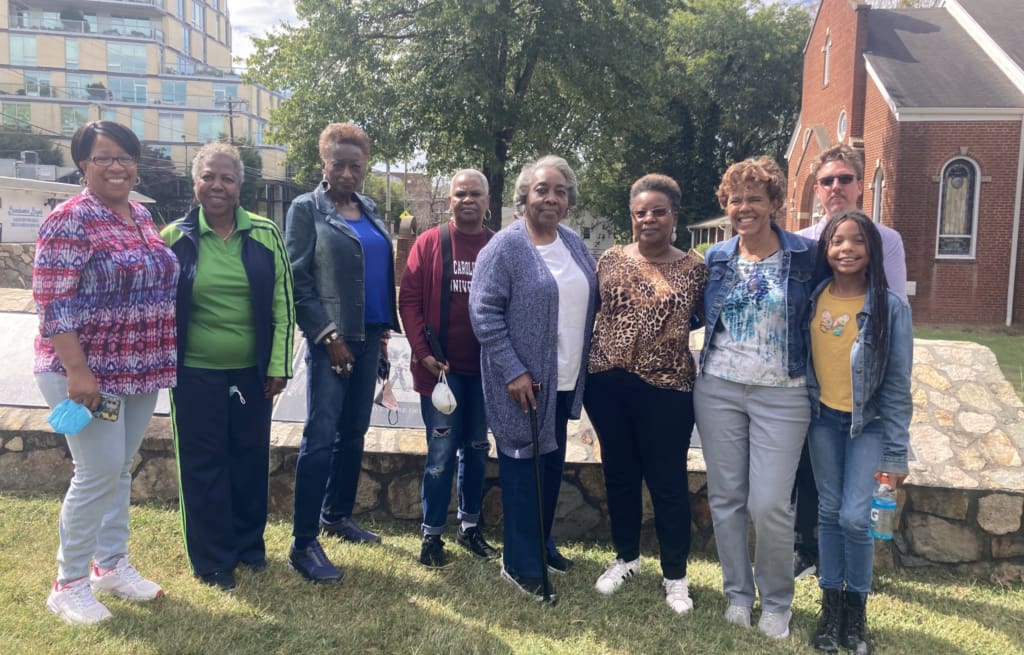
In the Grant Street neighborhood of Durham, North Carolina, a circle of Black women, lifelong friends, family, and neighbors, have been working together to preserve their homes, reclaim land, and strengthen community ties in the face of displacement for a generation. Collectively they make up some of the last remaining original residents of the neighborhood. From porches shaded by legacy trees to kitchens where soup is simmered and shared, they have sustained a rooted community defined by love, resilience, and strategic stewardship. Over the past decade, their collective efforts have secured affordable housing lots, blocked speculative sales, rehabilitated public spaces, and organized mutual aid projects for neighbors often overlooked by the City. Their story is not only about longstanding neighborhood efforts, but about the power of everyday organizing rooted in care. In a time where development pressures are rapidly reshaping Durham, Grant Street offers a lesson in what it means to defend place and legacy through consistent, relational work that builds power over time.
From Urban Renewal to Land Retention
Grant Street was once part of a thriving Black community that stretched through South Durham and the Hayti district. In the late 1950s and early 1960s, urban renewal and freeway construction carved through Black Durham, demolishing churches, businesses, and homes. Families were told they would be able to return within two years, but that promise was broken.
“They told us they’d come back for us in two years,” one of the Grant Street women remembered. “But they never did. They just left us here.”
For reasons no one fully understood, the 700-block of Grant Street was spared demolition. The families who stayed passed homes from grandparent to grandchild, even as the freeway rose behind their backyards. They watched as neighboring communities were displaced and declined offers from developers. Their decision to stay was not a single act of resistance but a steadfast choice made year after year.
“This is our legacy,” another explained. “Six generations have lived in this house. I’m not selling. It’s not going anywhere.”
The Grant Street Women as Neighborhood Stewards
In 2017, after years of watching city-owned lots sit vacant and nearby properties deteriorate, the women of Grant Street partnered with leaders from Monument of Faith Church to organize a neighborhood walk-through with city officials, including the police chief and city manager. What began as a conversation about safety and blight quickly grew into a larger agenda. They identified three underutilized lots owned by the city and successfully pressed for them to be donated for affordable housing. Working with partners from Monument of Faith and the Durham Community Land Trustees (DCLT), they ensured that development would remain in community hands. Plans are now underway to build a duplex and a single-family home with an accessory dwelling unit (ADU), adding long-term affordable housing opportunities to the block.
More recently, when a neighboring house came up for sale after its elderly owner passed without a will, the women sprang into action. With just ten days to respond before a speculative developer could snatch it up, they coordinated with Self-Help to temporarily acquire the property through its land bank. This bought time for the neighborhood to identify a permanent steward aligned with their values. In the meantime, they have cut the grass, monitored the property, and remain in touch with DCLT about the possibility for it to be acquired for permanent affordability.
“We didn’t want somebody coming in here just to flip it,” one of the women said. “We want somebody who will live here, take care of it, and be part of the community.”
Community Care as Collective Power
Their vision of stewardship extends far beyond property. For these women, care is the foundation of community power. Over the past several years, they have:
- Rehabilitated Grant Street Park, securing new playground equipment and improvements for local children and successfully advocating for ~$400,000 in stream bank enhancement work as part of a city infrastructure improvement project in the area..
- Distributed hygiene kits to unhoused neighbors twice each year, first launched through support from NeighborWorks America, a national nonprofit that supports local community development organizations across the country..
- Delivered meals and supplies to nursing students at North Carolina Central University who struggled to afford food during clinicals.
- Hosted community gatherings to welcome new neighbors with flowers, cards, and open arms.
- Hosted and visited Durham Mayors and City Council members, building relationships across multiple administrations.
- Watched over one another, checking in when someone doesn’t appear as usual, keeping an eye on children walking home from school, and looking out for the vulnerable.
“We might not have a lot, but we help with what we’ve got. Nobody on this street is going to go hungry,” one explained.
These acts of mutual aid rarely appear in planning and development documents, but they are the glue that holds neighborhoods together. They represent a form of organizing rooted in everyday life and an insistence on survival and dignity that is both deeply human and profoundly powerful.
Reframing Organizing, Reclaiming Power
The women of the Grant Street Community don’t call themselves activists. They describe their work as simply “taking care of the neighborhood.” But in practice, they have become strategists. They have learned zoning terminology, navigated property tax appeals, negotiated with developers, and testified to city officials. What they are building is not an absence of politics, but a politics of a dignified place. Their actions, from securing land for affordable housing to blocking speculative sales, are deliberate refusals to let the logic of the market erase their history. Their porch gatherings, food deliveries, and street-naming proposals are not just gestures of care but acts of belonging and defiance to be overrun by speculative development.
“We didn’t know all the language at first,” one woman reflected. “We had to look things up—learn what zoning meant, what a land bank was. But we weren’t going to give up.” Another added: “Sometimes it felt like it was too much. But then we thought about our parents, our grandparents—and we kept going. We don’t give up.”
Legacy in Motion
The Grant Street Community today sits on the cusp of another transformation. A long-vacant 21-acre site nearby is slated for redevelopment into more than 500 housing units, including affordable apartments, senior housing, and townhomes. The women sit on the project’s advisory board, helping to shape its design, secure affordability commitments, and recommend names for new streets that honor Black community elders. They have also begun inspiring younger residents, some with deep Durham roots and others newer to the block, who are eager to learn from their example and help carry forward their collective efforts.
What the Grant Street Community leaders have built is more than neighborhood preservation. It is a living model of care-based land stewardship, rooted in Black resilience, carried forward by memory, and enacted through a daily commitment to each other. Their story is a reminder that meaningful change doesn’t always come from large organizations or formal campaigns. Sometimes, it begins with neighbors who refuse to give up the land they’ve been entrusted with, and who continue, against all odds, to build something that lasts for current and future generations to enjoy.
Grant Street Community by the Numbers
| Community Win | Details |
|---|---|
| City-donated lots secured | 3 lots donated for affordable housing |
| Affordable homes in development | 1 duplex (2 units); 1 single-family with ADU |
| Speculative sale blocked | 1 home held via Self-Help’s land bank while community secures long-term owner |
| Advisory roles | Residents sit on board for 500-unit mixed-income development |
| Mutual aid efforts | Hygiene kits for unhoused; meals for nursing students; Both with funding support from NeighborWorks |
| Neighborhood Park improvements | Secured new playground equipment and repairs |
| Street naming | Proposed new names honoring Black community elders |